
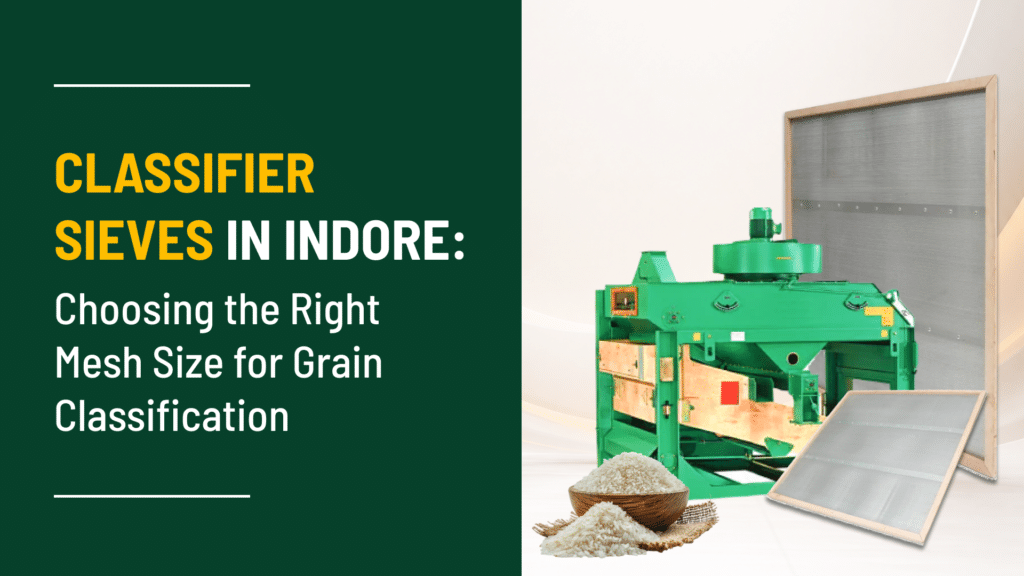
Flour mills and grain processing units depend heavily on accurate sieving to separate particles by size, remove impurities, and maintain consistent product quality. At the centre of this process are classifier sieves, and choosing the correct mesh size can make the difference between a smooth, efficient production line and one troubled by blockages, contamination, or product loss. As a dependable classifier sieves manufacturer in Indore, Dhanlaxmi Sales works closely with flour mills, dal mills, and grain processing units to help them select sieve components suited to their specific product lines and throughput requirements.
Why Mesh Size Matters in Flour and Grain Classification
Mesh size determines which particles pass through a sieve and which are retained on top of it. If the mesh is too coarse, fine impurities and undersized particles remain mixed with the finished product. If it is too fine, good product gets held back, reducing yield and slowing down the entire line. Selecting the right mesh size is therefore not a minor technical detail — it directly affects product purity, milling efficiency, and the wear life of the sieve itself.
Understanding Classifier Sieves and Their Role
Classifier sieves are used at various stages of grain and flour processing to grade material by particle size. They are typically mounted on shifter frames and vibrated so that material is stratified layer by layer, allowing oversized particles, correctly sized flour, and fine bran or husk to be separated in sequence. A well-matched classifier sieve setup keeps this grading consistent even during long production runs, which is especially important for mills that process multiple grain varieties on the same line.
Factors to Consider When Selecting Mesh Size
Choosing the right mesh size is not a single decision but a combination of several factors that need to be assessed together.
Product Type and Particle Size
Wheat flour, maida, suji, and besan all have different particle size distributions, so the mesh size needed for each product will differ. Mills that switch between products frequently should work with their sieve supplier to identify a small set of mesh sizes that can be swapped in efficiently without disrupting production.
Mesh Material and Durability
The mesh material must be able to withstand continuous vibration and abrasive contact with grain particles without stretching or tearing prematurely. Mesh that loses its shape over time will gradually widen its openings, allowing oversized particles through and compromising classification accuracy.
Sieve Frame Compatibility
Mesh size selection also depends on the frame it is mounted on. The sieve tension, frame dimensions, and mounting method all affect how evenly the mesh vibrates across its surface, which in turn affects classification accuracy. Working with a manufacturer that supplies both sieves and compatible frames helps avoid mismatches.
Role of Pre-Cleaner Sieves in the Cleaning Process
Before grain reaches the classifier stage, it typically passes through pre-cleaning to remove larger impurities such as straw, stones, and foreign material. A pre-cleaner sieves manufacturer in Indore like Dhanlaxmi Sales supplies pre-cleaner and fine-cleaner sieves in aluminium, wooden, and TAS-152 profile options, allowing mills to choose a configuration that matches their existing pre-cleaning equipment. Effective pre-cleaning reduces the load on downstream classifier sieves and extends their working life.
Vibro Destoner Wire Mesh: Complementing Classifier Sieves
Alongside sieving, destoning is essential for removing stones and dense foreign material that are similar in size to grain but heavier in density. A properly selected Vibro Destoner wire mesh manufacturer in Indore supplies wire mesh that works with the vibration and airflow of the destoner deck to stratify material by density, separating stones effectively while allowing clean grain to move forward for classification. Since destoner mesh and classifier sieves operate at different stages, coordinating their specifications with a single supplier helps maintain consistency across the line.
Sampler Sieves for Quality Testing
Beyond production-line sieving, quality control teams rely on smaller sampler sieves to test grain and flour samples for particle size distribution before and after processing. Using sampler sieves that match the mesh specifications used on the main production line gives mills a more accurate picture of how well their classification process is performing, and helps identify when mesh replacement is due.
Maintaining Sieve Efficiency with Rubber Balls
Even with the correct mesh size selected, sieves can become blocked or blinded by fine flour particles clinging to the mesh openings, especially in humid conditions. Rubber balls for sieve cleaning in Indore are placed beneath the sieve deck to bounce against the mesh during vibration, dislodging trapped particles and keeping the mesh surface clear. Regularly checking and replacing worn rubber balls or rubber cubes is a simple but effective way to sustain sieve performance between mesh replacements.
Choosing a Reliable Classifier Sieves Manufacturer in Indore
Mesh selection works best when it is treated as an ongoing conversation with your supplier rather than a one-time decision. A manufacturer that understands your product range, throughput, and existing equipment can recommend mesh sizes and frame combinations that reduce downtime and maintain consistent output. Dhanlaxmi Sales offers a wide range of grain and seed cleaning machine parts, from classifier sieves and pre-cleaner sieves to destoner wire mesh and sieve-cleaning accessories, giving mills a single point of contact for their sieving requirements. You can read more about the company’s background on the about us page, or browse the blog section for more guidance on grain cleaning equipment.
Conclusion
Selecting the right mesh size for classifier sieves is a technical decision that affects product quality, yield, and equipment longevity. It requires attention to product type, mesh material, and frame compatibility, along with support from pre-cleaner sieves, destoner wire mesh, sampler sieves, and sieve-cleaning accessories working together as one system. Partnering with an experienced classifier sieves manufacturer in Indore ensures mills get the right combination for their specific processing needs.
Get in Touch
For guidance on selecting the right mesh size or sieve components for your flour mill or grain processing unit, reach out to Dhanlaxmi Sales at +91-6260846795 (call or WhatsApp) or email info@dhanlaxmisales.com. You can also visit the contact us page for more details. Address: Khasra No. 219/3, Pipliyahana, Indore, M.P – 452016, India.