
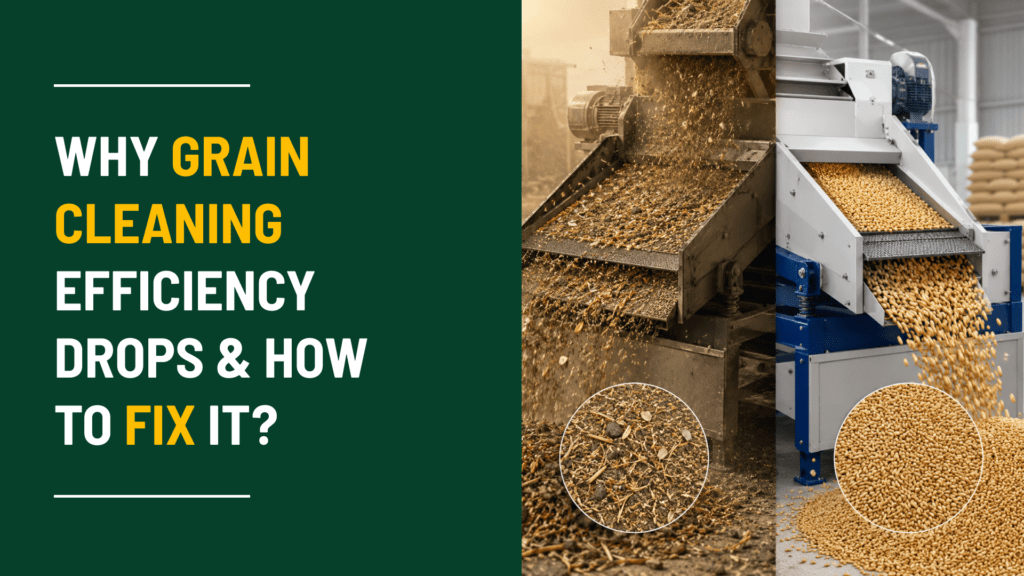
A sudden or gradual drop in grain cleaning efficiency rarely happens without cause. In most cases, it traces back to worn sieves, clogged mesh, or destoner components that are no longer performing as designed. Identifying the specific cause early prevents bigger downtime and product quality issues later.
Problem 1: Worn or Damaged Sieve Mesh
Over time, mesh openings stretch, tear, or clog with residue, directly reducing separation accuracy. Regularly inspecting sieve condition and replacing worn screens — including Shifter Frames with SS Wiremesh where durability is critical — helps maintain consistent cleaning accuracy.
Problem 2: Reduced Destoner Separation Accuracy
Destoner performance often declines due to worn rubber components. Components like Rubber Balls & Cubes, standalone Rubber Balls, and the Hollow Rubber Spring directly affect vibration transfer and stone separation efficiency as they age.
Problem 3: Stone Outlet Wear
A worn Rubber Product Stone Outlet can allow stones to re-enter the clean grain flow instead of exiting properly, silently reducing destoner effectiveness even when other components appear fine.
Problem 4: Loose or Worn Frame Connectors
Vibration performance depends on secure frame connections. Worn Male-Female Clamps or degraded MTRA Knobs and MTRA Black Knobs can cause uneven vibration distribution across the sieve bed.
Problem 5: Product Inlet Irregularities
An improperly seated or worn MTRA Product Inlet can cause uneven material flow onto the sieve surface, leading to inconsistent separation even with otherwise healthy screens.
Problem 6: Motor and Drive Component Wear
Reduced vibration intensity often traces back to the Vibro Motor or general Motor performance declining, sometimes compounded by a worn Timing Belt affecting consistent power transfer.
Problem 7: Gearbox-Related Power Loss
In machines using geared drive systems, a worn Gearbox can cause inconsistent speed and vibration output, directly impacting separation quality over time.
Common Problems and Fixes at a Glance
Symptom | Likely Cause | Fix |
Poor size separation | Worn or clogged mesh | Inspect and replace sieve screens regularly |
Stones in clean grain output | Worn rubber balls, springs, or stone outlet | Replace worn destoner rubber components |
Uneven vibration | Loose clamps or worn knobs | Check and tighten or replace frame connectors |
Inconsistent material flow | Worn product inlet | Inspect and replace inlet component |
Reduced vibration intensity | Motor, belt, or gearbox wear | Service or replace drive components |
Building a Preventive Maintenance Habit
- Inspect sieve mesh condition on a regular scheduled basis, not just after visible performance drops
- Check destoner rubber components for wear before each new processing season
- Confirm frame connectors are secure during routine equipment checks
- Monitor motor and vibration consistency as an early warning indicator
Key Takeaways
- Most grain cleaning efficiency drops trace back to worn mesh, destoner components, or drive parts.
- Worn rubber balls, springs, and stone outlets are common, often-overlooked causes of reduced destoner accuracy.
- Loose clamps and worn knobs can cause uneven vibration distribution across sieve beds.
- Motor, timing belt, and gearbox wear directly affect overall separation consistency.
- Regular, scheduled component inspection prevents larger downtime and quality issues later.
Frequently Asked Questions
How often should sieve mesh be inspected?
Regular scheduled inspection, ideally before each processing season or after high-volume runs, helps catch wear before it noticeably affects output quality.
Why do stones sometimes still appear in cleaned grain?
This often points to worn destoner rubber components or a degraded stone outlet, both of which reduce density-based separation accuracy over time.
Can worn knobs and clamps really affect cleaning performance?
Yes, they directly affect vibration consistency across the sieve bed, which is central to accurate separation.
What’s a sign that the vibro motor needs attention?
Noticeably reduced vibration intensity or inconsistent shaking patterns are common early indicators of motor or drive component wear.
Should gearbox issues be addressed immediately?
Yes, since gearbox wear affects overall speed and vibration consistency, delaying service can compound efficiency losses across the whole machine.
Conclusion
Restoring grain cleaning efficiency almost always comes down to identifying which specific component — mesh, destoner parts, connectors, or drive components — has worn beyond effective performance.
Browse genuine replacement parts across the full Dhanlaxmi Sales product range or learn more about our expertise to keep your grain and seed cleaning machines running at full efficiency.