
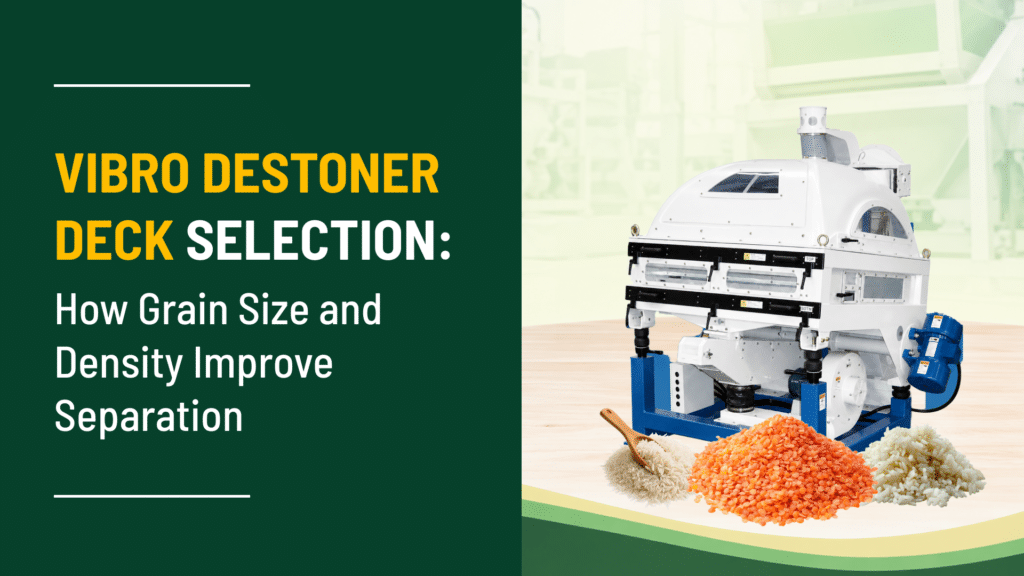
A Vibro destoner removes stones and other heavy material from grain and seed using vibration, air flow and the density difference between clean product and contamination. The part that does the actual work is the deck, and in most plants that means the wire mesh and the frame that holds it. If the mesh is wrong, worn or blocked, even a well-maintained machine will give poor purity or throw good grain into the stone outlet.
This guide explains how product density, grain size, moisture and deck construction affect wire mesh selection, so plant operators and purchase teams can describe their requirements clearly. If you are looking for a Vibro Destoner wire mesh manufacturer these are the points to check before you place an order. You can also see the full range of cleaning-line spares on the DhanlaxmiSales
Why the wire mesh decides destoner performance
The mesh supports the product layer, spreads the air evenly and carries heavier particles toward the stone outlet. When the open area is uneven, the mesh is loose, or the openings are partly blocked, air passes unevenly across the width of the deck. The result is local areas where stones stay in the clean stream while good grain is lifted toward rejects, even when the machine settings look correct.
For this reason, a replacement should be chosen for the product and the machine, not just by matching the outer size. A reliable Vibro Destoner wire mesh manufacturer will ask about the grain, the contamination level and the condition of the existing deck before recommending a mesh.
How product density affects mesh selection
Destoning depends on density difference. Stones and similar heavy material respond differently to air and vibration than sound grain. The wider the density gap, the easier the separation. When the gap is small, the operating window becomes narrow and the deck, air and feed rate need much closer control.
Density also varies within the grain itself. Shrivelled, damaged or damp kernels behave differently from sound kernels, and dense good grain can be lost to the reject side if the machine is set too aggressively. A mesh that supports a stable, even product layer helps the operator use the density difference without pushing the air setting to the maximum.
Grain size and mesh opening
Grain size decides how the product sits on the deck and how air moves through it. Small seeds need a mesh that supports them without letting fines pass through or packing the openings. Larger grains need a mesh with enough open area and strength to keep the layer moving without blockage.
Size distribution matters as much as average size. A feed with whole kernels, broken grain, dust and foreign matter will stratify unevenly, and fines can fill the spaces between grains and raise air resistance. When you enquire about a Vibro Destoner wire mesh manufacturer in indore supply, share the crop, the usual size range and how clean the feed is.
Moisture, dust and blocked mesh
Damp grain clumps, sticks to the deck and carries dust that settles in the mesh openings. Blocked openings cut air flow and make separation unstable, and changing the mesh will not help if the feed itself is the cause. If purity changes with weather or storage conditions, check feed moisture and cleaning frequency before blaming the deck.
Regular cleaning of the deck, a controlled feed and a simple log of feed condition against separation results make it much easier to tell whether the problem is the mesh or the product.
Open area, wire diameter and frame support
Open area controls how much air reaches the product. Too little restricts air and makes the layer unstable. Too much weakens support and makes the deck more sensitive to feed variation. Thicker wire resists wear but reduces open area, while finer wire passes more air but wears faster in abrasive conditions.
The mesh also depends on its frame. A correctly sized mesh will still underperform if it is loose, warped or leaves bypass gaps at the edges. Dhanlaxmi Sales supplies vibro destoner complete wooden frames for destoner decks, along with shifter frames with SS wiremesh for other cleaning stages. Rubber parts such as the rubber product stone outlet also affect how cleanly the reject stream leaves the machine.
Feed rate, air and vibration
No deck can make up for wrong settings. A feed rate that is too high builds a deep layer that air cannot act on evenly, hiding stones inside the product. Too much air carries good grain to the reject side, and too little leaves stones in the clean stream. Excessive vibration moves the product too quickly for separation to occur.
After fitting a new mesh, start with a controlled feed rate, change one setting at a time and sample both the clean and reject outlets. Raise capacity gradually and note the point where purity begins to fall.
How the destoner fits with classifier and pre-cleaner sieves
A destoner works best when the product reaching it has already been cleaned of coarse and fine impurities. In most grain and seed lines, pre-cleaning and classification come first, which is why sieve quality upstream affects destoner results.
Frames play an equally important role in achieving efficient machine performance. If you are looking for Classifier PP Frames, explore the Classifier PP Frames (MTRA) range. For reliable Classifier Wooden Frames manufacturers in Indore, choosing a frame that accurately matches your machine is just as important as selecting the right mesh.
Common deck problems to check
- Blocked openings from dust, sticky grain or product buildup.
- Bent, broken or unevenly worn wires and loose mesh tension.
- Warped or damaged frames that change the deck shape under vibration.
- Bypass gaps at the edges that let product skip the separation zone.
- A mesh that does not match the grain size or density range being processed.
What to share when ordering a replacement
To avoid confusion between similar-looking parts, give your supplier the machine model, deck position and dimensions, existing mesh and wire details, frame type, the product being cleaned, and the problem you are seeing, such as low purity or good grain in the stone outlet. After installation, run a controlled trial and record clean-stream purity, contamination in rejects, grain loss and throughput.
Conclusion: choose the mesh for your product
Destoner performance depends on how density, grain size, moisture, feed rate, air, vibration and deck construction work together. A well-chosen wire mesh with a properly fitted frame gives a wider, steadier operating window, better purity and less good-grain loss.
Dhanlaxmi Sales supplies sieves, frames and spares for grain and seed cleaning lines from Indore. To learn more about the company, visit the about us page, read more on our blogs page, or return to the Dhanlaxmi Sales. To discuss your destoner mesh, classifier or pre-cleaner requirement, please contact us with your machine and product details.
Contact Information
Phone Number
+91-6260846795
Whatsapp Number
+91-6260846795
Email ID
info@dhanlaxmisales.com
Address
KHASRA NO. 219/3, PIPLIYAHANA, INDORE, M.P – 452016, INDIA